Mom and Baby Wolves: A Designer’s Embroidery Review
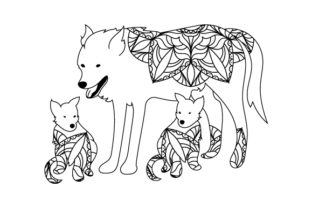
When evaluating a new machine embroidery design for professional or commercial use, my first question is always about emotional resonance versus technical viability. The Mom and Baby Wolves design immediately strikes a balance between these two critical factors. As a reviewer who has stitched out countless wildlife and mandala-inspired motifs, I see this artwork not just as a digital file, but as a potential centerpiece for custom apparel and personalized gifts. The composition suggests a protective, nurturing bond that translates beautifully into thread, but like any intricate embroidery project, it requires thoughtful preparation to ensure the finished product meets client expectations.
Evaluating the Mood and Composition for Real Projects
The visual personality of Mom and Baby Wolves leans heavily into organic symmetry. While categorized under Mandalas, this design avoids the rigid geometry often associated with that style. Instead, it uses the circular flow to frame the subjects naturally, creating a sense of movement and warmth. For an Etsy seller or boutique owner, this distinction matters. Customers looking for nursery decor or maternity-themed sweatshirt embroidery are often drawn to designs that feel soft and storytelling rather than purely decorative.
In my assessment, the layout is versatile enough to serve as a primary focal point on a tote bag design or a centered chest placement on a hoodie. The interaction between the figures provides a natural anchor for the eye, which is essential when you are selling handmade products where the embroidery must be legible from a distance. However, because the design relies on this interplay of shapes, the negative space is just as important as the stitched areas. When reviewing the transparent PNG or EPS files included in your download, pay close attention to how the outer edges fade or terminate. This will dictate whether the design works better as a standalone embroidered patch or if it should be integrated directly into a garment’s fabric.
Performance Across Different Substrates and Applications
I recently considered this design for a run of custom canvas tote bags intended as holiday gifts for a wildlife conservation fundraiser. In this real-life scenario, the Mom and Baby Wolves motif performed exceptionally well because canvas provides a stable foundation for detailed stitch work. The design’s complexity allows for a mix of satin stitch outlines and fill stitch interiors, giving the wolves texture and dimension that pops against the matte fabric background.
For craft business owners focusing on baby embroidery, such as onesies or blankets, the design offers significant value but demands adaptation. The "Mom and Baby" theme is inherently marketable for newborn photography props or shower gifts. Yet, infant garments are small and stretchy. If you plan to use this digital embroidery file for baby items, you must verify the hoop size compatibility. A design that looks spacious on a 4x4 inch screen might become too dense when scaled down for a 6-month bodysuit. High stitch density on thin knit fabrics can lead to puckering or stiffness, compromising the comfort of the finished product. In these cases, testing the design on scrap fabric similar to your final substrate is non-negotiable.
Conversely, for heavier items like denim jackets or aprons, the design holds up beautifully. The weight of the denim supports higher stitch counts without distortion, allowing the intricate details of the wolves' fur and the mandala elements to shine. This makes it an excellent candidate for commercial embroidery projects where durability and visual impact are paramount.
Technical Considerations for Professional Results
A beautiful SVG or DXF file does not guarantee a perfect stitch-out. As experienced makers know, the transition from digital asset to physical thread involves variables that software cannot always predict. When preparing Mom and Baby Wolves for production, consider the following technical aspects to maintain brand consistency and quality:
- Stabilizer Selection: Given the likely combination of detailed curves and potential fill areas, using the correct stabilizer is vital. For stretchy fabrics like jersey knits used in sweatshirts, a cut-away stabilizer is usually required to prevent the design from warping after washing. For woven fabrics like tea towels or pillow covers, a tear-away may suffice, but always test first.
- Thread Color Contrast: The mood of this design shifts dramatically based on palette. High-contrast threads (e.g., white wolves on navy fabric) emphasize the graphic, mandala-like qualities. Tonal threads (e.g., grey on charcoal) create a subtle, textured look that feels more high-end and boutique. Before committing to a large batch for your shop, stitch out color variations to see which aligns with your brand aesthetic.
- Fabric Texture Interaction: Highly textured fabrics like terry cloth or fleece can swallow fine details. If you are applying this design to a plush blanket or towel, consider using a water-soluble topping to keep the stitches visible and crisp. Without this step, the intricate connection between the mom and baby figures might get lost in the pile.
- Scaling Limitations: Always check the original digitizing parameters. While vector formats like SVG and EPS are infinitely scalable for print, embroidery files have physical limits. Reducing the design too much can cause satin stitches to become too narrow to stitch reliably, leading to thread breaks or needle damage. Conversely, enlarging it beyond its intended size may result in sparse coverage. Verify the recommended size range before adjusting for different hoop sizes.
Navigating Commercial Use and Product Value
For creative entrepreneurs and digital product sellers, understanding the licensing and application rights of Mom and Baby Wolves is as important as the stitching itself. The inclusion of multiple formats (SVG, Transparent PNG, EPS, DXF) suggests versatility, but you must confirm whether these are intended for physical embroidery production, digital mockups, or both. Using a transparent PNG to create printable mockups for your Etsy listings is a smart way to gauge customer interest before investing time in sampling. However, ensure you have the appropriate commercial license if you plan to sell finished goods or distribute the digital embroidery file itself.
The perceived value of a handmade product often hinges on execution. A cleanly stitched Mom and Baby Wolves design signals professionalism and care. It tells the buyer that the maker understands their materials and has taken the time to test tension, density, and placement. This builds customer trust, especially in niche markets like wildlife art or personalized family gifts. When the design is executed well, it elevates the entire item from a simple craft to a keepsake.
Final Thoughts for Makers and Sellers
Mom and Baby Wolves is a compelling addition to any embroiderer’s library, particularly those serving the family, nursery, or nature-loving demographics. Its strength lies in its emotional narrative combined with a structured, aesthetically pleasing layout that suits various crafts. Whether you are creating a bespoke patch for a backpack, decorating a boutique sweatshirt, or designing a unique holiday card, this motif offers a rich canvas for creativity.
However, success with this design comes down to preparation. Treat the provided files as a starting point, not a guarantee. Run tests on your specific machines and fabrics. Evaluate the stitch density against your target substrate. Respect the scaling limits to preserve the integrity of the artwork. By approaching Mom and Baby Wolves with a professional, critical eye, you ensure that every finished product leaving your studio reflects the quality and intention that your customers expect. Ultimately, it is this dedication to the craft that transforms a digital download into a cherished, tangible reality.